Angkor Wat, Angkor Thom, Banteay Srei and others were all accessible with a $20/day park pass that becomes discounted when purchased for more than one day (we paid $40 each for a three day pass). There are two popular "cuiriuts" that tours follow: mini - Angkor Wat and Angkor Thom complexes with minor temples along the way (including the Laura Croft, Tomb Raider, temple); grand - Banteay Srei with other minor temples along the way. The cost of the tuk-tuk can vary, though a fair price is around $12 for the mini circuit and $28 for the grand circuit (which will take about an hour just to get to the first temple). Jim, the driver, was very friendly and would try to explain what he could with his broken English. The tuk-tuks are rented for the day, so the fee you pay includes a driver that will wait for you outside while you sight see and then shuttle you to the next sight or back to the hotel if you are finished wandering around. Generally, we took 6+ hours to see everything we wanted, though we definitely put more time and effort into the first few sights of the day and skimmed over the last few. Going during the summer may have been a bad idea as it was extremely humid and hot and we were not ready for the climate.
Traveling through Southeast Asia. Cambodia, Vietnam, Laos, Thailand, Malaysia, Singapore, and Indonesia are all on the list of places to visit. There will be sights to be seen, treks to hike, beaches to relax on, and food to be tried.
Showing posts with label Cambodia. Show all posts
Saturday, June 19, 2010
Wat beauty!
Angkor Wat, Angkor Thom, Banteay Srei and others were all accessible with a $20/day park pass that becomes discounted when purchased for more than one day (we paid $40 each for a three day pass). There are two popular "cuiriuts" that tours follow: mini - Angkor Wat and Angkor Thom complexes with minor temples along the way (including the Laura Croft, Tomb Raider, temple); grand - Banteay Srei with other minor temples along the way. The cost of the tuk-tuk can vary, though a fair price is around $12 for the mini circuit and $28 for the grand circuit (which will take about an hour just to get to the first temple). Jim, the driver, was very friendly and would try to explain what he could with his broken English. The tuk-tuks are rented for the day, so the fee you pay includes a driver that will wait for you outside while you sight see and then shuttle you to the next sight or back to the hotel if you are finished wandering around. Generally, we took 6+ hours to see everything we wanted, though we definitely put more time and effort into the first few sights of the day and skimmed over the last few. Going during the summer may have been a bad idea as it was extremely humid and hot and we were not ready for the climate.
Thursday, June 17, 2010
Phnom Pehn
(The view from the shared balcony.)
Our first home away from home, Indochine 2 Hotel. We were brought here near midnight and after we had found out that they will not pick you up from the airport even when they say they will and confirm it with you. Instead we took a $7 tuk-tuk that seemed super sketchy at the time, but worked out perfectly in end. The room was nice enough and the staff were more than friendly for the $22/night for a double bed and en suite. We later found out that this price, while cheap in the US, was not as inexpensive as other places; though you get what you pay for and this was worth it for the location alone.
The Royal Palace of Phnom Penh is generally a nice place to visit, however, the queen's birthday was the next day and the throne room was closed to visitors. The 25000r (~$6) admission fee was way to lofty for the limited access.
(below) Within the Place grounds is the Silver Pagoda that has a tile floor made of, you guessed it, silver. Most of the floor is covered to protect it and you can feel the tiles separating from the floor. Most of the room houses old Buddhist artifacts and gifts to the royal family.
Restoration projects are ongoing at the palace as workers maintain the grounds
The National Museum was skipped, though it looked nice from the outside.
Wat Phenom was within walking distance of our hotel and it was more worth it to see than the Palace. The monkeys were docile and free to see. The elephant ride was a skipped because at $15 as the poor beast does the same 50 yard circuit over and over again.
Siem Reap
To get to Siem Reap from Phnom Penh, we took mini bus for $10 each. It promised to deliver us in under 5 hours and it made true with that promise at 4.5 hours including a bathroom/snack break. The road was narrow and dirt, but that did not stop the horn-leaning driver from ducking in and out of oncoming or passing traffic. We would have been more fearful for our lives, but coming off of a two year stint with Korean taxi driver has eased our opinion of "safe."
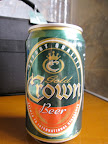
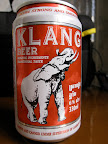
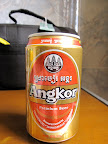
Cam Beer Showdown: Results
So this was a competitive set that does not include other popular beers originating outside of Cambodia. These were ranked based on their initial flavor and how that can equate into quantity of beers consumed. Now, terrible beer can be okay when there are limited option and good beer can be limited in how many you can stomach at once, so this comparison is about which local beers taste the best while not being too "heavy" where you want to stop after one or two.
The Winner:
This beer was crisp, while maintaining a smooth flavor. This had the highest "drinkability" ranking as it did not leave a bitter taste and wasn't too heavy. This beer would be more Bud Light than Busche Light; not that it was over advertised and super popular, but that it was refreshing on a hot day, and could play well with a drinking game.
The rest are listed from second place to worst.
This beer is special in that it has a 6%ABV, but it tastes like it. You know that sweet flavor that seems to be necessary in a malt beverage? This has it and it is not the most desirable flavor when you need to punish you liver. It was smooth for its ABV, though once the novelty of that wears off, you are left with a just okay beer. This one would be the Busche Light of the group.
Angkor Beer
This is another beer with a higher ABV at 5%. This should help it as it tastes less like a high alcohol content beer while getting the job done quicker, but its flat overall flavor ruined its chances. Its lack of flavor limits it ability to be pounded with the best, though it is better than Cass and Hite.
Bayon Pilsner
This was the first beer I tried in the study, so maybe I wasn't in the right mindset to give it a good ranking or I just needed a primer, but it was a little disappointing. Bayon had the smooth pilsner taste that should help its ranking, but lacked the crispness that makes it easy to knock back.
Angkor Extra Stout
I enjoy drinking stouts, but I will admit that the heaviness of most stouts limits most to just a few until they are too full to carry on. Angkor Extra Stout did not fail to follow in those footsteps. It was too heavy to knock back too many and its flavor was lacking. This tasted more like a stout beet cut this a light beer. Its chocolate aftertaste made it seem like I had added chocolate syrup to a light beer with a milk foam topper. I had high hopes and it disappointed.
So here is a "scientific" evaluation to help anyone who ventures into Cambodia looking for a local brew. The one kicker is that most places have only Angkor Beer on tap or an import.
Wednesday, June 16, 2010
Killing fields
| From killing fields |
There was a somber moment while I was thinking about all those who had died by the hands of the Khmer rogue, that was shattered by the sounds of children at recess at the school next door. I think this kind of summarizes how the Khmer people are handling their past with the present and future. On the way to these fields we passed by a number of factories for overseas companies. Our tuk-tuk driver explained that while the workers don't earn a lot by western standards, their job security, that includes housing and meals, is well appreciated.
We paid $12 for driver to take us to and from Choeung Ek and S21 where we could spend as much time there as we desired. We had to pay an admission fee for $2 at the fields and another $2 at the prison camp. These fees are claimed to be for restoration and preservation, though I hear that the sights were leased to a Japanese company several years ago so the government could made a quick buck; Cambodians get into either for free.
Initially, after you pass through the ticket gate, you are presented with a field that is almost lacking in visual history.
It is once you get behind the row of trees that the horrors emerge. There are several huts that have been constructed to maintain the visual sights of past mass graves.
The unprotected holes that have already been excavated are visual reminders to the magnitude of the sighs.
Bones that have not been collected are made aware through natures grace which shows the necessity of protective huts.
Some bones are used as reminders of the preservation efforts (1980's excavations). . .
. . . others are entombed in a memorial stupa.
A museum to the left of the entrance serves as a guide to the attrocites and a symbol of the reservation efforts at work through historical plaquards, short films about the Khmer Rogue, and agknolegments to those that are helping to protect the sights memory.
From the killing fields we traveled back into the city where S21, a former school turned torture camp is located. This compound was used for "re-education," which really meant admitting the political crimes you were accused of so they could take you to the killing fields. This museum also has been maintained with the addition of fact cards and graphic depictions of what happened within the walls not too long ago. The Khmer Rogue, while terribly brutal, were excellent bookkeepers in their insistence on photographing all their victims. This allows the remains at the field to be identified the faces to be put on the horror as their portraits are hung in remembrance throughout S21.
Subscribe to:
Posts (Atom)